
Reviewed · SNOWSHOEING TOURS
Explore Winter Woods: Snowshoe walk with local Biologist
Snowshoeing in Lapland feels like stepping into a lab. With Terhi, a local biologist in Inari, you trade generic nature talk for real Arctic clues you can actually see on the ground.
This is a small-group winter walk through ancient woods, lakes, and mires, guided in English and geared toward how animals live here in the cold.
I love that the group stays tiny, max 6 people, so questions do not get lost in the snow. I also love the open-fire kota finish, with hot drinks and local snacks after you work up a chill. One possible drawback: wildlife sightings are never guaranteed, so if you need an elk or hare to happen on schedule, you may feel slightly let down.
In This Review
- Key things to know before you step onto the snow
- Why Inari winter woods feel different with Terhi and Arto guiding
- Meeting at Terstontie 123 and getting set up for the walk
- Walking the ancient woods: lakes, mires, and “small clues” on a snowshoe line
- Wildlife spotting that stays honest: tracks, birds, and conditional sightings
- The kota stop: hot drink, local snacks, and birds close enough to watch
- What the pace and group size do for your experience
- Price and value: is $114.02 worth it?
- When you should go: winter timing, bird season, and expectations
- Practical tips so your snowshoe day stays comfortable
- Who this tour fits best
- Should you book Explore Winter Woods with AT Nature?
- FAQ
- How long is the Explore Winter Woods snowshoe walk?
- Where is the meeting point in Inari?
- What time does the tour start?
- Is the tour offered in English?
- How many people are in the group?
- What wildlife and nature will we look for during the walk?
- What do we do after the snowshoe walk?
- Does it include snowshoe and winter gear support?
- What if weather is poor or I need to cancel?
Key things to know before you step onto the snow
- A biologist-led route with plant and animal ID, not just a walk in the dark woods
- Track-reading and bird watching as you move along lakes and mystic mires
- Small group size (up to 6), which makes the explanations feel personal
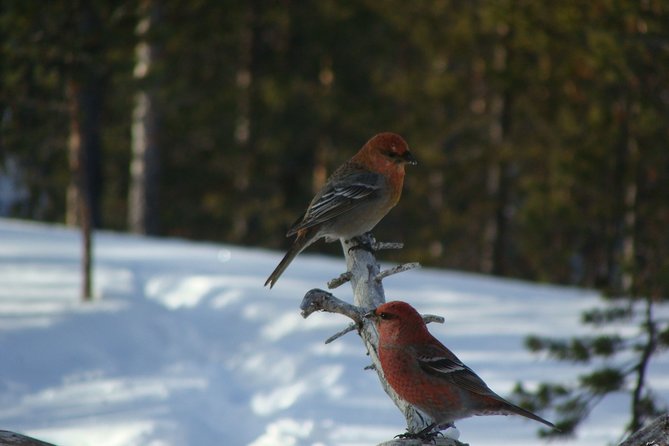
- Seasonal bird focus, with Pine Grosbeaks starting to show up around mid-February to early March
- Warm-up in a kota by an open fire, with local snacks and a hot drink
- Back to the meeting point after a drive toward Inari, so you are not left to figure out transport
Why Inari winter woods feel different with Terhi and Arto guiding
This experience is all about seeing winter in layers. Yes, you are in snow and trees. But the real magic is learning how the Arctic gets read, track by track, bird by bird.
Terhi’s style (English offered throughout) is practical. She points out what you would miss on your own: how to spot tracks that are fresh enough to matter, what feeding birds look like when they decide to hang around, and what the plants and vegetation are telling you about the place. Arto rounds it out with the “life here” side, including bushcraft as part of everyday Arctic living.
You get a guided view of Lapland that feels like it belongs to the people who live there, not a scripted show. And you still get outdoors time, not museum time.
More Snowshoeing Tours in Lapland:
- Scenic Snowshoeing on the Top of Pyhä Fell
★ 5.0 · 10 reviews - Premium Snowshoeing in Pyhä-Luosto National Park
★ 4.5 · 6 reviews - Private Northern Lights Tour With Skis Or Snowshoes in Pyhä
★ 5.0 · 4 reviews
Meeting at Terstontie 123 and getting set up for the walk
You meet at Terstontie 123, 99870 Inari, Finland, with the start time listed as 10:00 am. The tour ends back at the same meeting point, so you can keep your day plan straightforward afterward.
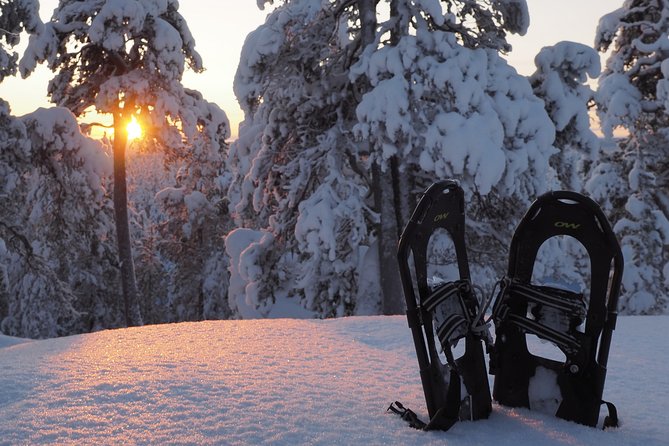
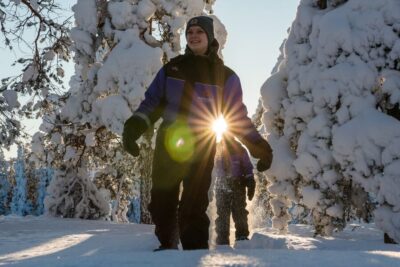
The early part of the day is about settling in. You get to know the guides, hear about home and lifestyle in the Arctic, and then you shift into gear mode. Snowshoe walks work best when the group learns fast, so expect a proper fit for winter gear such as snowshoes and boots before heading out into the woods.
That matters more than it sounds. A bad fit turns “beautiful forest walk” into “sore feet and frustration.” People tend to enjoy this one because it starts with the basics, then moves quickly into learning and walking.
Walking the ancient woods: lakes, mires, and “small clues” on a snowshoe line
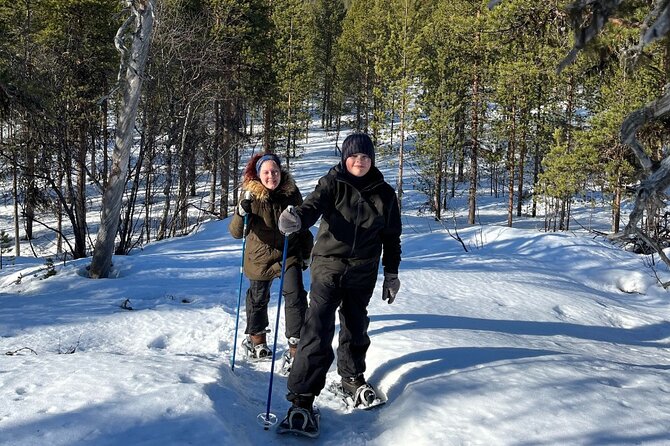
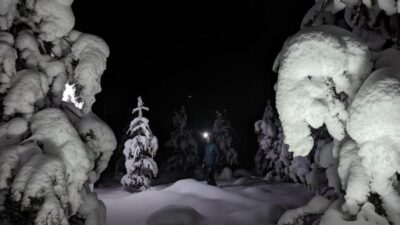
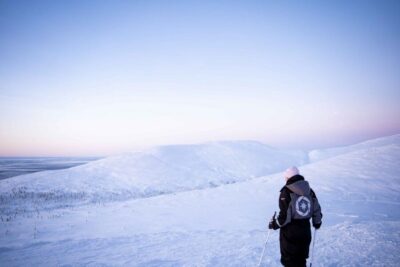
Once you start, you head into the ancient woods along lakes and mystic mires. This is not a flat, paved stroll. The snowshoe route changes how you move, and that is part of the point. Walking this way slows your brain down, so you notice details.
Terhi guides you to look around in a more organized way:
- where animal tracks often appear in winter conditions
- how to spot signs of feeding birds nearby
- what the surrounding vegetation can suggest about the area’s ecology
The forest itself is described as being part of the oldest forests in Lapland. Even if you have seen a lot of winter trees, there is a difference between “trees everywhere” and “an ecosystem that has survived for a long time.” You feel that here because the guide keeps steering you toward what the forest is doing, not just what it looks like.
Wildlife spotting that stays honest: tracks, birds, and conditional sightings
Here’s the best part, and also the reason you should set expectations kindly. You will look for wildlife clues, and you might see animals. But winter sightings depend on conditions, and the guide clearly does not oversell.
During the walk, you observe possible animal tracks. You also watch for feeding birds. The species mentioned as common around the route include Siberian Jay and Siberian Tit. If you catch them in the right mood, they can be a quick lesson in how animals survive winter behaviorally, not just biologically.
For bigger animals, luck plays a role. The tour suggests you might see elk and Mountain Hare during the walk. That word choice matters. It keeps the experience grounded. You are not paying for a guaranteed animal photo. You are paying for the skill to read what’s there, even when the animals stay hidden.
Seasonal note if you are going in late winter: by mid-February or early March, the group starts looking for the first Pine Grosbeaks to return. If you match that timing, you are likely to feel the walk shift from “tracks and birds” to “seasonal changes you can actually witness.”
Practical takeaway: you will enjoy this more if you treat sightings as bonuses and focus on the learning.
More Walking Tours in Lapland:
- Northern Lights Walk to Old Kemi with BBQ and Arctic Views
★ 5.0 · 3 reviews - A Finntastic Walking Tour in Helsinki
★ 5.0 · 700 reviews - Epic Helsinki: English Speaking Walking Tour
★ 4.8 · 661 reviews - Helsinki: Private Walking Tour with a Local
★ 4.5 · 429 reviews
The kota stop: hot drink, local snacks, and birds close enough to watch
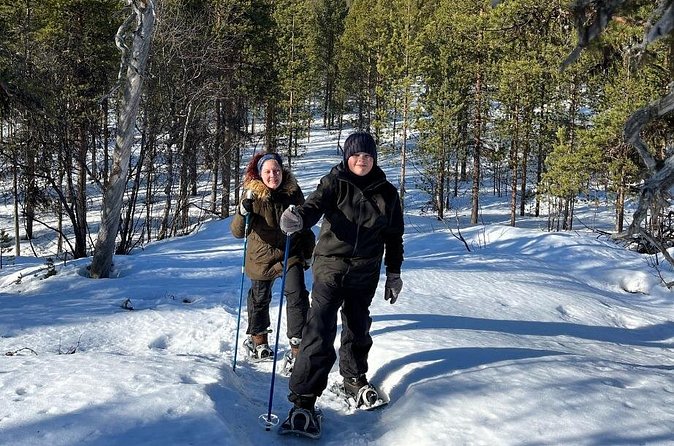
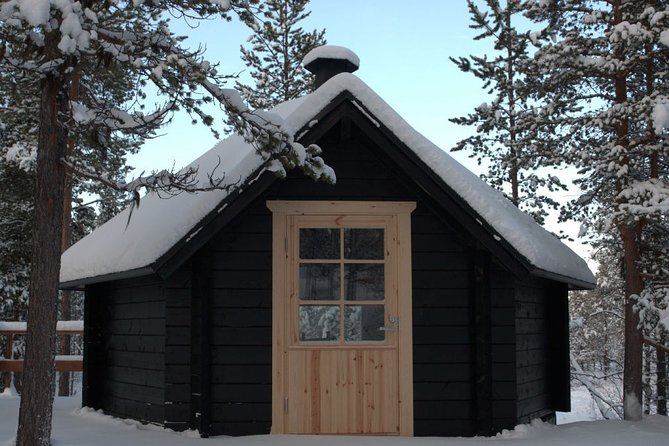
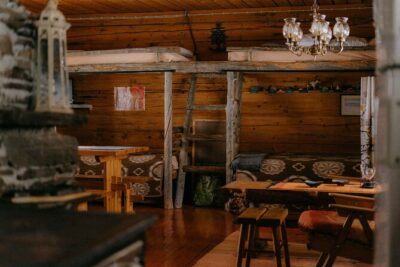
After the snowshoeing, you drive back toward Inari. Before the day wraps up, you stop at a kota, an open-fire hut, for warmth and food.
This part is consistently praised. It is not just “sit and thaw.” It is the payoff. You get an open-fire hot drink and local snacks while you stay alert to birds moving around nearby. In the best moments, you can go from studying the forest from a snowshoe path to watching wildlife approach curiosity level once you are sheltered.
Based on the kinds of snacks and drinks described, you may get options like coffee or tea paired with buns, plus heartier small bites such as cheese and a moose toasted snack, and even something sweet like a home-baked muffin. The specifics can vary, but the structure is the same: warm your hands, eat something local, and let the birds finish the lesson for you.
This stop also gives you a natural place to ask follow-up questions. When people are warm again, they tend to ask better questions about climate change impacts, Arctic lifeways, or what to look for the next day.
What the pace and group size do for your experience
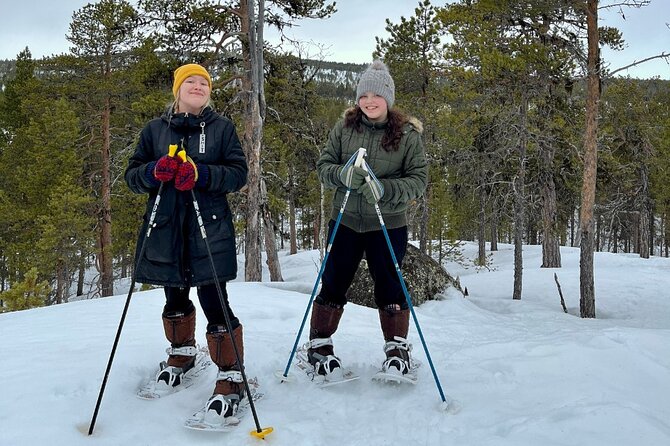
This tour caps at 6 travelers, which is a big deal in winter. Small groups mean:
- fewer people needing help with snowshoe balance
- easier conversation, even in cold wind
- more individual attention when someone spots a track and wants to know if it matters
The walk runs about 2 hours 30 minutes total (approx.). That is long enough to feel like you did something real, without turning the trip into an all-day endurance test.
Also, service animals are allowed, and most travelers can participate. That tells me the activity is structured for broad participation rather than only extreme winter sports folks.
If you bring kids, pay attention to attention span. One review notes that an 11-year-old joined and enjoyed it, but also says very young kids may not be ideal, depending on how long they can stay focused outdoors.
Price and value: is $114.02 worth it?
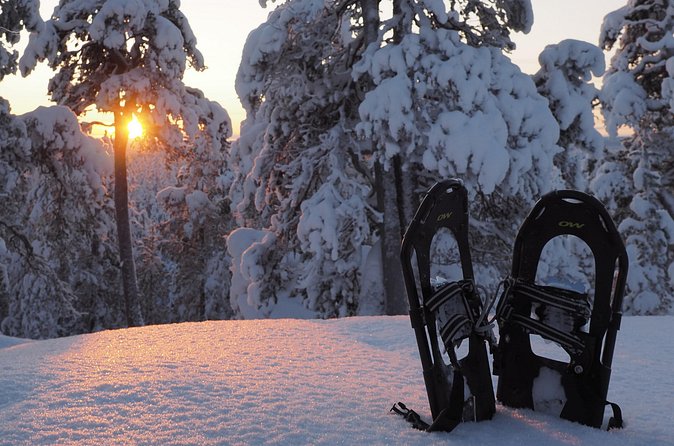
The price is listed at $114.02 per person for about 2.5 hours. On paper, that can look like “not cheap.” In practice, you are paying for three things that cost real money in remote winter locations:
1) A specialist guide who can identify plants, track patterns, and birds, and explain how Arctic ecosystems work
2) Winter equipment and safe pacing for a snowshoe walk
3) The kota experience, including an open fire and local snacks, plus time to warm up
If you compare it to cheaper group tours where you mostly shuffle through snow while someone reads facts off a card, the value comes from being taught how to notice. The small group size also raises the price, but it is hard to beat when you want real interaction.
My advice on value: if you care about nature education that you can use later, and you want your first Lapland day to make sense, this feels worth it. If your idea of value is a long wildlife safari with big animals guaranteed, you might prefer a different type of tour.
When you should go: winter timing, bird season, and expectations
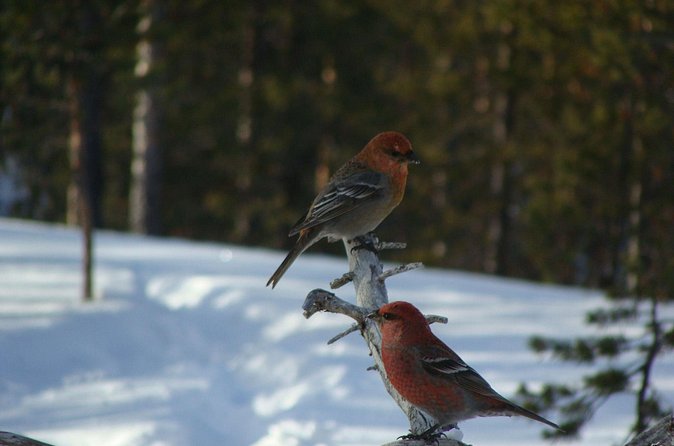
This tour is designed for winter woods, so plan around real Arctic seasons. The tour specifically mentions that by mid-February or early March, Pine Grosbeaks may begin to return. If that species matters to you, target that window.
Also remember that the walk is weather-dependent. The cancellation terms note it requires good weather, and if it is canceled due to poor conditions, you will be offered another date or a full refund.
So you will want to keep a little flexibility in your trip schedule. If you are traveling during a cold spell with fog or heavy snow, the operator can have to adjust.
Practical tips so your snowshoe day stays comfortable
You do not need to be a pro. But you do need a few basic habits for winter walking:
- Dress in layers that you can adjust. The activity stays outdoors, then you warm up in a kota.
- Be ready to walk slower than you think. Snowshoes change how your body moves.
- Bring your curiosity mindset. This is a “look down and look around” tour, tracks and birds included.
And one more tip: take the guide’s track and bird cues seriously. When you lean in, the forest turns from scenery into evidence.
Who this tour fits best
I think this is a great fit if:
- you want a guided nature lesson you can build on during the rest of your Lapland trip
- you love winter and want to learn how Arctic animals actually show themselves
- you like small groups and do not want a loud, rushed experience
It may be less ideal if:
- you only care about guaranteed large-animal sightings
- you prefer a relaxed, minimal-talk outdoor activity where you mostly zone out
Should you book Explore Winter Woods with AT Nature?
Book it if you want your first Inari winter day to feel meaningful. The combination of snowshoeing through ancient woods, a biologist-led focus on tracks and birds, and a warm kota finish makes this one of those tours that keeps paying off after you leave.
I would hesitate only if you are chasing a guaranteed elk or hare sighting, because the experience is honest about luck. But if you come ready to learn how to read the Arctic, you will leave with skills, not just photos.
If you are visiting around mid-February to early March and you care about winter bird changes, this is even more tempting. And either way, the small group size and the open-fire snacks make it feel personal, not touristy.
FAQ
How long is the Explore Winter Woods snowshoe walk?
It lasts about 2 hours 30 minutes.
Where is the meeting point in Inari?
The meeting point is Terstontie 123, 99870 Inari, Finland. The tour ends back at the meeting point.
What time does the tour start?
The start time is 10:00 am.
Is the tour offered in English?
Yes, the tour is offered in English.
How many people are in the group?
The group maximum is 6 travelers.
What wildlife and nature will we look for during the walk?
You will observe possible animal tracks and feeding birds. Siberian Jay and Siberian Tit are commonly around, and with luck you might see elk or Mountain Hare. By mid-February or early March, the group starts looking for Pine Grosbeaks.
What do we do after the snowshoe walk?
Before driving back to Inari, you enjoy an open-fire hot drink and local snacks in a kota.
Does it include snowshoe and winter gear support?
The experience description centers on a snowshoe walk, and reviews mention snowshoes and boots being fitted.
What if weather is poor or I need to cancel?
The activity requires good weather. If it is canceled due to poor weather, you will be offered a different date or a full refund. You can cancel for free up to 24 hours in advance for a full refund.
Latest to land in Lapland
- Lapland Wilderness Adventure – Explore Wild Arctic Trails★ 5.0 · 3 reviews
- Ylläs: Guided Night Skiing Tour Under the Arctic Sky★ 5.0 · 4 reviews
- Arctic Fishing & Open Fire Cooking★ 5.0 · 5 reviews
- Snowmobile drive experience★ 5.0 · 14 reviews
- Snowmobile Safari in the Forest★ 4.5 · 3 reviews
- Private Snowshoeing Tour In Pyhätunturi With A Local Guide★ 5.0 · 3 reviews
- Traditional Sight-Skiing Experience in Kemi★ 5.0 · 9 reviews
- Premium Wilderness Skiing in Pyhä-Luosto National Park★ 5.0 · 4 reviews
Snowshoeing Tours, compared.
Pallas-Yllästunturi National Park Snowshoeing Tour
Read our review →
Arctic Reindeer Farm Experience with Snowshoeing in the Wild
Read our review →Browse the lists this tour appears in